• Home
  • About Me
  • Organisations
  • Practitioner Training
  • Client Support
  • Contact
Logo of the Ross Neurodiversity Integration Framework with a multicolored circular design.

Your neurodivergent clients aren't failing therapy. Therapy is failing them.


There is a gap between what happens in the therapy room and what changes in your client's life. It has a   name. And now there is a bridge.

When Insight Isn't Enough - Introducing RNIF™

A clinical framework for working with neurodivergent clients.

RNIF™ is not a replacement for your therapeutic modality; rather, it serves as a therapy framework that complements your existing approach. It provides a longitudinal structure for what comes after the insight arrives, guiding neurodivergent clients through their entire journey—from the moment they arrive in crisis to achieving consolidated, independent change.


Your client has climbed the whole way. They have the insight and can visualize the other side. RNIF is the bridge that helps them get there.


The book marks the beginning of this bridge. It provides you with the framework, the clinical rationale, and the language for what you have always felt was missing. The two-hour CPD training day translates that understanding into your practice, allowing you to work through real case material so that the framework evolves from something you've read into something you can actively use. The certification training is where you learn to construct the bridge yourself, with the depth and rigor needed to apply RNIF across the full arc of client work.

Logo of the Ross Neurodiversity Integration Framework with a multicolored circular design.
Introducing RNIF™

When Insight Isn't Enough

Written by Bianca Marie Ross, a qualified counsellor, NLP practitioner, and the older sister of two brothers with autism, this book does not explain what neurodiversity is, you already know that. Instead, it delves into what is structurally missing from the support neurodivergent clients currently receive.

Notify Me When It's Available

The Journey

There is a gap between what happens in the therapy room and the changes in your client's life, particularly when working with neurodivergent clients. This gap has a name, and now there is a bridge, thanks to innovative CPD training that enhances the therapy framework.

RNIF - The Bridge to Integration

The Nine-Pillar RNIF™ Framework

The CPD Training Day, two hours of practice-focused application

A reframe of relapse, from failure to clinical information

There is a gap between what happens in the therapy room and the changes in your client's life, particularly when working with neurodivergent clients. This gap has a name, and now there is a bridge, thanks to innovative CPD training that enhances the therapy framework.

A reframe of relapse, from failure to clinical information

The CPD Training Day, two hours of practice-focused application

A reframe of relapse, from failure to clinical information

If you have watched a neurodivergent client lose the ground they gained in therapy, and felt that familiar, uncomfortable question, did I miss something? This section will change how you hold that experience within your therapy framework. RNIF treats relapse not as regression but as the integration gap asserting itself. For your neurodivergent clients, this approach removes the shame that delays them from seeking help again. For you, it alleviates the professional self-doubt that often comes from misreading what relapse actually means, reinforcing the importance of CPD training in understanding these dynamics.

The CPD Training Day, two hours of practice-focused application

The CPD Training Day, two hours of practice-focused application

The CPD Training Day, two hours of practice-focused application

Reading a therapy framework and knowing how to apply it with neurodivergent clients on a real Tuesday are two different things. The RNIF™ Intro Training Day effectively bridges that gap. You will explore the nine pillars using case material, identify where your current clients fit within the framework, and leave with a solid plan. This CPD training counts toward your hours. With small cohorts, it is led by Bianca, the practitioner who developed the framework from real client work, not from a textbook.

The Ross Neurodiversity Integration Framework Training

Introduction to the Ross Neurodiversity Integration Framework (RNIF)

A structured introduction to a longitudinal framework designed to help neurodivergent clients translate therapeutic insight into sustainable real-world change through strengthening internal resources and supporting greater independence within a collaborative framework. 


This session explores a common gap in practice, where clients gain understanding in therapy but struggle to maintain change beyond the counselling space. It focuses on the structure and application of the framework, rather than full practitioner training.

The framework centres on what happens after therapy, and why sustainable change is often missing.


Sessions are offered in both evening and daytime formats across alternate months to support accessibility.
Logo of the Ross Neurodiversity Integration Framework with a multicolored circular design.

This session will cover:

This session will cover:

This session will cover:


  • The integration gap in therapy 
  • Core principles underpinning RNIF 
  • The structure of the 9-pillar framework 
  • How the framework applies in practice

What you will gain:

This session will cover:

This session will cover:


  • A clearer understanding of why insight does not always lead to change 
  • A structured way to conceptualise client difficulties beyond diagnosis 
  • A framework to support more sustainable outcomes in practice

Who this is for:

This session will cover:

Who this is for:


  • Counsellors and psychotherapists 
  • Trainee counsellors (with supervision) 
  • Mental health professionals working with neurodivergent clients

Start Your Journey Today and Book The Training Here

Book Here

Frequently Asked Questions

Please reach us at bianca-marie-ross@outlook.com if you cannot find an answer to your question.

 Probably not in the way you are expecting. Most neurodiversity training, including the good ones, focuses on understanding how neurodivergent clients present, think, and communicate. RNIF starts where that training ends. It is not about recognition. It is about what you do after the recognition, across the full arc of the client's journey from crisis to consolidated change. If you have already done awareness-level CPD, this framework is the clinical next step. 


 Yes. RNIF does not require a diagnostic label to be applicable. It requires a client whose experience maps onto what the framework describes, chronic strain, difficulty maintaining therapeutic gains, capacity that fluctuates with environment and demand, insight that does not easily transfer into daily life. Many neurodivergent adults are undiagnosed, misdiagnosed, or mid-assessment. The framework is built for the lived experience, not the label. 


 Short-term work that produces insight without integration is not efficient — it produces clients who return, often in worse shape, consuming more resource over time. Even within six sessions, RNIF changes what you attend to, what questions you ask, and how you work with the ending. A client who leaves six sessions with a named barrier, a basic relapse plan, and a shared understanding of where they are in their journey is in a qualitatively different position than one who leaves with insight alone. Partial application of the framework is still better than no framework. 


That is the right question to ask. The book is priced to make that decision straightforward. The training is capped at small cohort sizes precisely so it is specific enough to be immediately applicable, not a general overview you have to figure out how to translate back into your work. Both are CPD-certifiable. And both come with the kind of clinical rationale that makes them defensible in supervision, not just interesting in the moment. If you are unsure, start with the book. 


Your neurodivergent clients aren't failing therapy. Therapy is failing them.

You have neurodivergent clients who are insightful, self-aware, and genuinely motivated, yet they keep finding themselves in the same situation. The therapy sessions are productive, the relationship is authentic, and the insight is present. Still, something isn't quite right. 


You may have questioned whether you are missing an essential element. Perhaps the therapy framework you trained in wasn't designed for these neurodivergent clients from the start. Is the issue rooted within them, or is it located in the gap between your therapy room and the broader context of their lives? 


It is indeed in that gap. You are not the first practitioner to recognize this disconnect, feel its impact, and struggle to find the clinical language to effectively bridge that gap. Engaging in CPD training could provide you with valuable tools to enhance your approach.

A Note From Bianca

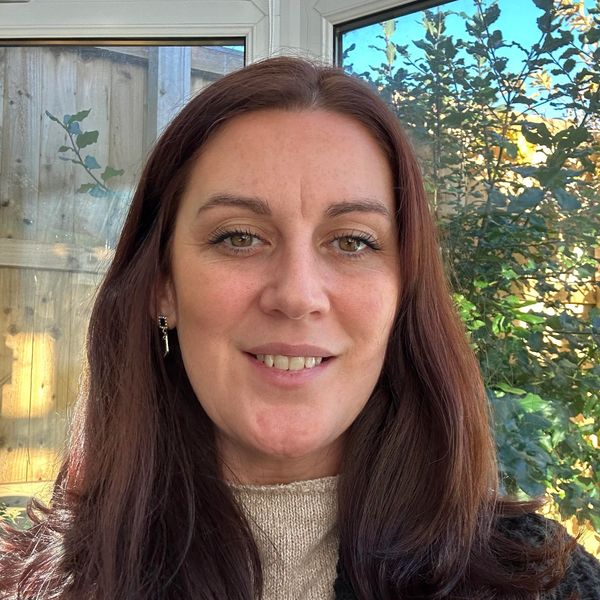
Bianca Marie Ross, creator of RNIF™, the clinical framework bridging the gap between therapy and real-world change for neurodivergent clients.

I built this framework because a client asked me a question I could not answer.


She had been through therapy before. She knew what insight felt like. She also knew what it felt like to leave therapy with that insight and return, months later, to the same place, sometimes worse. She asked me what would be different this time.


I did not have an answer. I went and found one.


RNIF is that answer. It is not perfect and it is not finished, no clinical framework ever is. But it is real, it is grounded in the actual experience of neurodivergent clients and the practitioners who work with them, and it addresses something the field has been quietly avoiding.


Your clients deserve support that was actually designed for them. This is that support.


Bianca Marie Ross


Qualified Counsellor · NLP   Practitioner · Creator of RNIF™

Copyright © 2026 Bianca Marie Ross - All Rights Reserved.

Powered by

  • Privacy Policy
  • Terms Of Service

This website uses cookies.

We use cookies to analyze website traffic and optimize your website experience. By accepting our use of cookies, your data will be aggregated with all other user data.

DeclineAccept